

 Content Menu

 Search
 HOME
HOME
 About Us
Safety Research Institute
Main Research Results
About Us
Safety Research Institute
Main Research Results
About Us
Safety Research Institute
Main Research Topics(Including Completed Themes)
- Research on Work Engagement in Road Industry
- Effects of perceived importance of on lapse errors in the last phase of a task
- Research on measures for preventing sleepiness in train drivers, etc.
- Research on measures to cope with irregular situations
- Assessment of the effects of Human Factor Education
- Research on prevention of railway accidents caused by human error
- Research on sleepiness of night shift
- Research on mental load caused by safety fence on platform during driving trains
- Research on Enhancing Risk Sensitivity
- Research regarding the Impact of Psychological Safety on Safety Behaviors
- The Impact of Supervisors' Management Behavior on Psychological Safety
- A Review of Research on Decision Biases in Meetings and Discussions
- Analysis of Assumption Cases in Railway Operations and Examination of Countermeasures
- An experimental study on the error chain occurrence
- Research on changes in interpersonal behavior when given a role or power
- Research for fostering a work environment where it is easy to speak up
- Research on the impact of aging on the work of railway staff
- Research on appropriate leadership behavior in the workplace
- Research on human-machine interaction
- Research on sound volume of alarm suitable for driving trains
- Evaluation of monitors‘ visibility for checking passengers flow
- Process of driving operation in system change of train cab environment
- Research on design of control panel in train cabs of 227 Series
- Age-related differences in appropriate local lighting conditions for visual Inspection and Maintenance Work
- Research on measures for intoxicated individuals on the platform
- Research on preventing accidents caused by using smartphone at stations
- Evacuation behaviors and rescue activities in railroad tunnel fire accidents
- Research on behavioral characteristics of elderly driver on level crossings
Anken, Vol. 18 — Research Results Report

The 18th volume of “Anken” included a summary of the Safety Research Institute’s 2024 research results.

Anken, Vol. 18 — Research Results Report (PDF; 3,557 KB)
-
-
 Examining factors that influence safety behaviors

-
In the 2023 study titled “The Impact of Psychological Safety on Safety Behavior,” we reported that “psychological safety” and “work engagement (hereafter, WE)” may influence “safety behavior.” However, this study aimed to investigate other factors beyond these two because other probable factors also affect safety behaviors. To achieve this, we conducted two studies: (1) identifying potential factors by analyzing internal survey data, and (2) reviewing previous studies conducted for similar purposes. The results of (1) indicated a strong correlation between the tendency to engage in “jibungotoka” (interpreting events that did not happen to oneself as if they did) and safety behaviors. From (2), we identified several individual and workplace factors that were closely related to safety behaviors. In Section 3, we have summarized the results of study (2) by research field.
-
-
-
 The influence of supervisors’ management behaviors on psychological safety (Part 2)
-
Psychological safety refers to a team atmosphere in which members feel comfortable speaking up without hesitation or fear of retribution. In our company’s safety action plan, “building psychologically safe teams” is identified as a key component of our organization-wide safety framework. Information sharing and learning from mistakes are encouraged in psychologically safe teams, which is expected to reduce errors and enhance overall safety.
Numerous studies have emphasized the significance of leaders in fostering psychological safety within teams. This study aimed to identify specific leadership behaviors and conditions that enhance psychological safety by reviewing the relevant literature.
-
-
-
 Overview of the effects of aging on driving-related tasks
-
In our company, the employment of senior staff up to the age of 65 and “grand senior” staff up to the age of 70 has been progressing. This employment practice has led to an increase in the number of employees aged 60 and older who are actively engaged in frontline operations. To operate a railway, various tasks are required, including train operation, station duties, and maintenance of rolling stock and facilities. However, many of these tasks still rely heavily on human attention and judgment, making cognitive and physical functions critical.
Cognitive function refers to the mental processes involved in perceiving external information, directing attention to where it is needed, storing information in memory, and making inferences or judgments based on the situation or experience. Numerous studies have reported that many cognitive and physical functions tend to decline with age. It is therefore essential to properly assess whether such declines might affect railway safety.
Accordingly, this study focused on driving-related tasks to examine the types of errors that employees across age groups are prone to, both objectively and subjectively, by analyzing actual attention-related incidents and questionnaire responses.
-
-
-
 Ease and difficulty of work associated with aging: A questionnaire survey of senior employees
-
We generally assume that physical and mental changes associated with aging may affect employees’ sense of workload and task difficulty. This study conducted a questionnaire survey to examine how senior employees (aged 60-65) perceive these effects and the strategies they use to cope with them. The participants included employees who had recently been designated as senior staff members and those already in senior positions.
-
-
-
 An experimental study on the error chain occurrence: Emotional analysis following errors using a web-based survey
-
When multiple mistakes occur in succession, they can sometimes lead to serious accidents. In this study, we refer to the phenomenon in which one mistake triggers another as an “error chain.” Our goal was to clarify the underlying causes and mechanisms of error chains. In the current fiscal year, we conducted a web-based survey targeting the general public outside the company to identify the emotions that arise immediately after an error—the first stage of the error chain. This paper presents a part of those results.
-
-
-
 A study on enhancing risk sensitivity: An examination of attitudes toward actively identifying risks.
-
To properly recognize risks that could lead to accidents, it is essential to approach work with a consistently high level of “proactive attitude toward identifying risks.” This attitude includes thinking concretely about potential risks daily, consulting colleagues’ opinions, and learning from past incidents. In this study, we examined factors related to a proactive attitude toward risk identification using responses from the company-wide Safety Awareness Survey (hereafter referred to as the “Safety Survey”), conducted by JR West in fiscal year 2024. In particular, we focused our analysis on two aspects: the “jibungotoka tendency,” which is the inclination to relate incidents that occurred elsewhere to oneself, and JR West’s ongoing “kakunin desuga” (“Just to confirm…”) initiative.
-
Previous Main Research Results
-
Up to 2023
-
Up to 2022
-
Up to 2021
-
Up to 2020
-
Up to 2019
-
Up to 2018
-
Up to 2017
-
Up to 2016
-
Up to 2015
-
Up to 2014
-
Up to 2013
-
Up to 2012
-
Up to 2011
-
Up to 2010
-
Up to 2009
-
Up to 2008
-
Up to 2007
All rights reserved. Copying without express permission is prohibited.
Our Teaching Materials
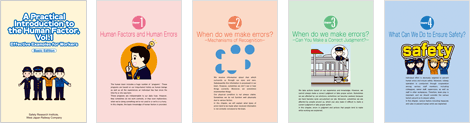
A Practical Introduction to Human Factor, Vol.1: Effective Examples for Workers (Basic Edition)
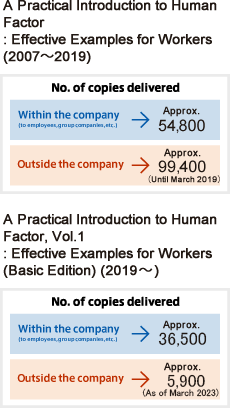
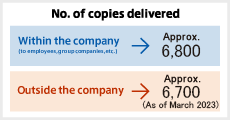
The Safety Research Institute published the textbook, “A Practical Introduction to the Human Factor: Effective Examples for Workers” in March 2007, and has distributed over 150,000 copies of this book inside and outside the company by March 2019. This textbook explains human factors using simple expressions in an easy-to-understand way. The book is used for education in human factors inside and outside the company. Over ten years have passed since publishing the first edition of the book, and we have revised its content by adding information on the normalcy bias, confirmation bias and incorporating knowledge and achievements gained from research activities during the last ten years. We updated “For better understanding and disseminating human factors” and published “A Practical Introduction to the Human Factor,Vol.1 Effective Examples for Workers (basic edition, 89 A4 pages).”
A Practical Introduction to the Human Factor, Vol.2: Effective Examples for Team Leaders
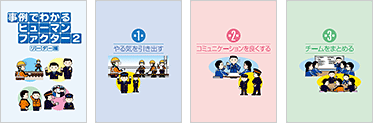
In March 2017, A Practical Introduction to the Human Factor, Vol.2: Effective Examples for Team Leaders was introduced as a sequel to A Practical Introduction to the Human Factor: Effective Examples for Workers with a focus on academic research as well as the previous book. This follow-up included teaching materials that focused on information management supervisors on the industry frontlines should know, and was distributed to employees and group companies on the industry frontlines. Continuing on from the first publication, A Practical Introduction to the Human Factor, Vol.2: Effective Examples for Team Leaders introduced topics (7 in total) geared toward management supervision in an easy-to-understand way using familiar events as examples and with various illustrations and charts. (A4 size, 50 pages)
The Safety Research Institute sent representatives to branch offices to give lectures related to this publication as well, including on methods for utilizing the teaching materials contained within.
(Japanese text only)
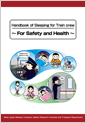
Handbook of Sleeping for Train crew
The Safety Research Institution published the Guidelines for Preventing Sleepiness of Train drivers: For Health and Safety for operators in November 2009. In an effort to prevent sleepiness in train crew members, the Safety Research Institute actively researches the body and sleep mechanisms of people based on academic studies as an essential factor in preventing sleepiness.
In March 2018, the "Handbook of Sleeping For Train Crews: For Safety and Health" was published with additions and revisions of new findings, and daily life items based on guidelines. (A4 size, 53 pages)