HOME
HOME



(Local train) Cycle Train: Gobo–Shingu
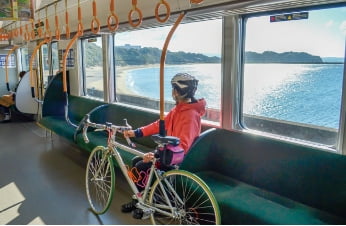
On the Kinokuni Line between Gobo and Shingu, you can bring your bike on board without taking it apart—no reservation needed. Just pay the regular fare.
(Note) There is no dedicated bike space on board.
Be sure to bring your own straps (rubber straps work well) and secure your bike firmly to a handrail or fixture once on board.
If you don’t have straps, or can’t secure your bike, you may be turned away.
(Note) Bicycles that are too heavy to be safely carried by one person (generally those weighing 30 kg or more), such as electric-assist bicycles or tandem bicycles, are not permitted for use from the standpoint of ensuring the safety of those around you.
Available Trains, Fares, and Reservations
(Local train) Cycle Train: Gobo–Shingu
On the Kinokuni Line between Gobo and Shingu, you can bring your bike on board without taking it apart—no reservation needed. Just pay the regular fare.
- Available Trains
-
A few trains aren’t available. Please check the List of Available Trains before you ride.
For details, see the List of Available Trains below.
- Boarding Stations
- Local trains on the Kinokuni Line.
Any station between Gobo and Shingu.
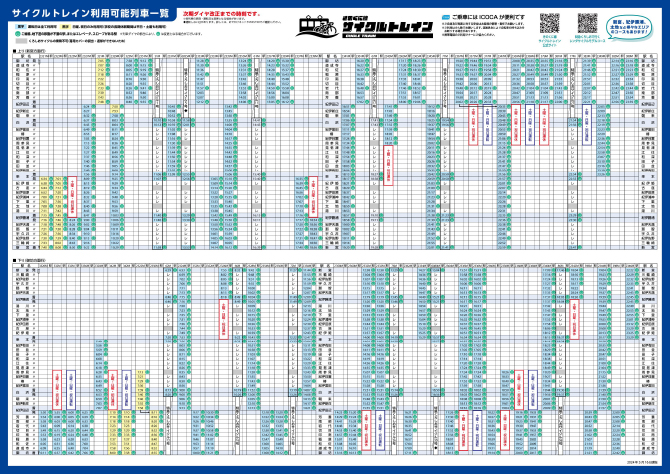

Cycle Train (Local train, Gobo–Shingu): How It Works
- No reservation needed
- No extra charge
- No disassembly required
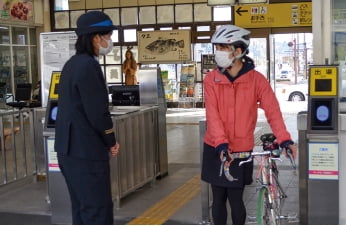
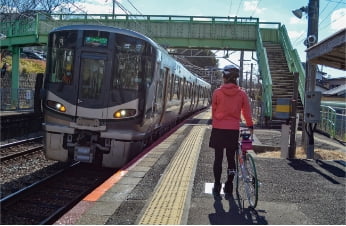
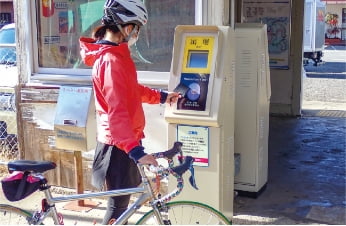
Boarding Trains Without a Conductor
Trains between Gobo and Shingu run without a conductor.
Here’s how to ride:
At staffed stations: Gobo, Kii-Tanabe, Shirahama, Kushimoto, Kii-Katsuura, and Shingu
- Boarding
-
Tap the blue IC reader at the gate, then board.
- Exiting
-
After getting off, tap the yellow IC reader at the gate.
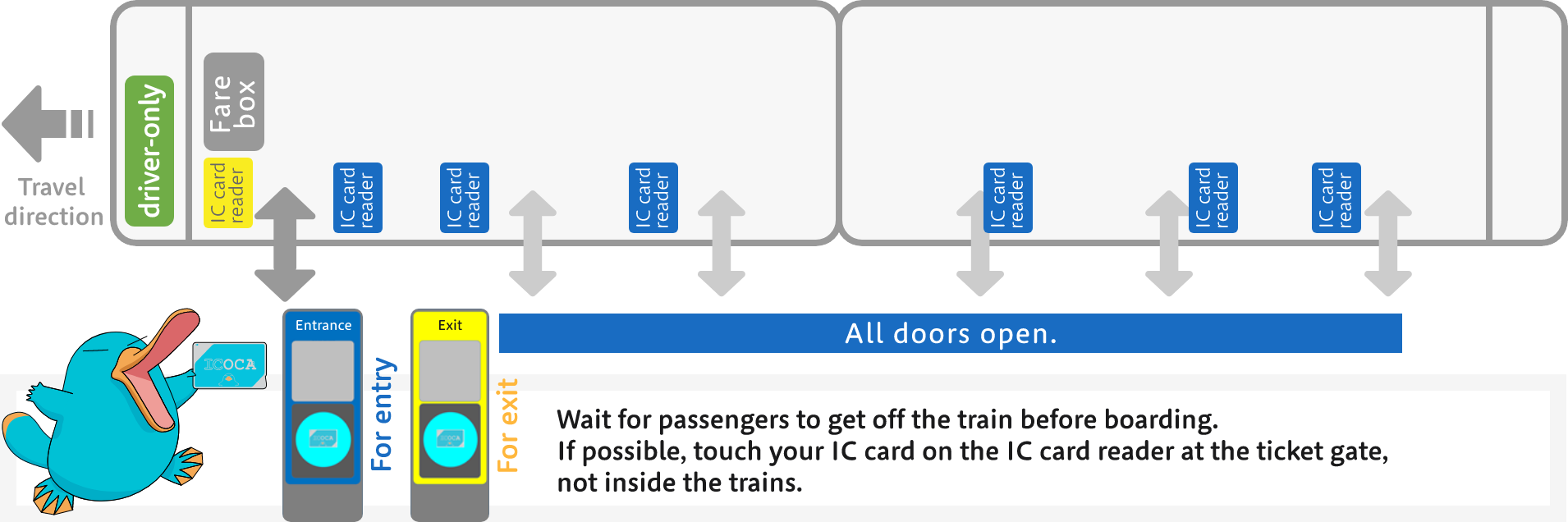
At unstaffed stations between Gobo and Kii-Tanabe
- Boarding
-
Tap the blue IC reader at the gate, then board through the front door of the first car.
- Exiting
-
Get off through the front door of the first car, then tap the yellow IC reader at the gate.
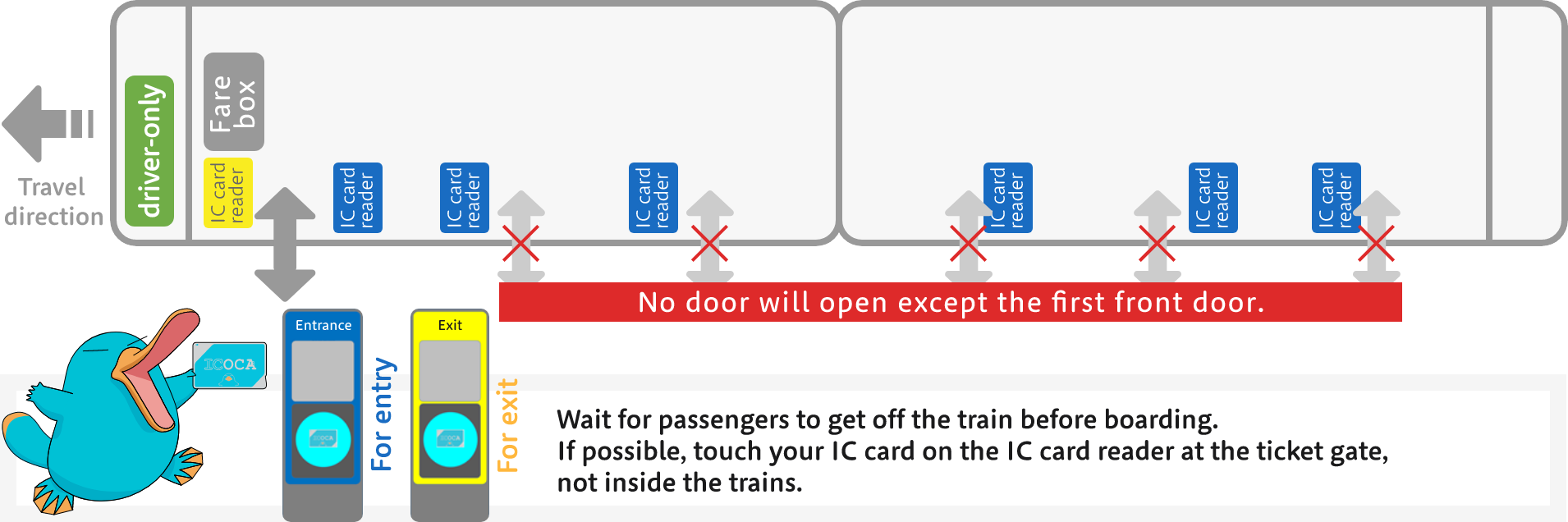
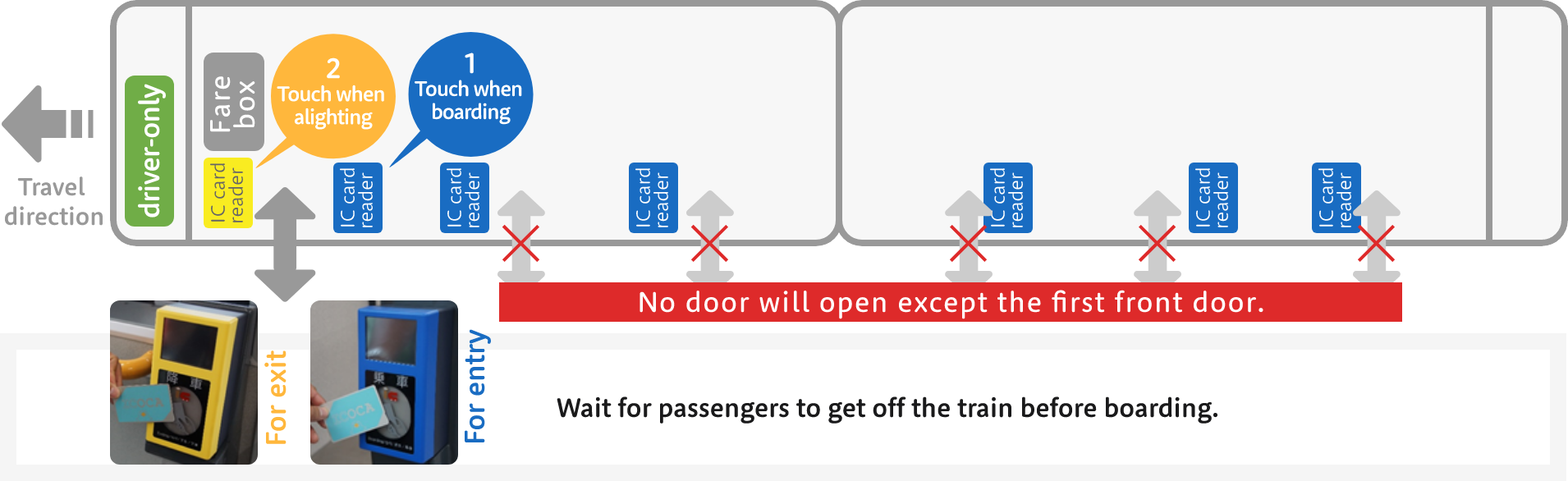
At unstaffed stations between Kii-Tanabe and Shingu
- Boarding
-
Tap the blue IC reader near the front door of the first car.
- Exiting
-
Tap the yellow IC reader near the driver’s cab at the front of the first car.
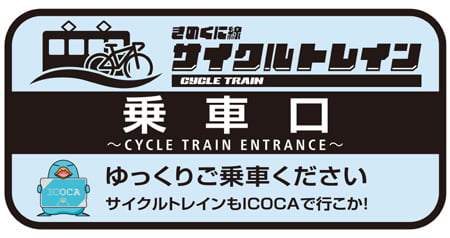
This sign marks your boarding spot!
Watch a video about the Kinokuni Line Cycle Train!
- ICOCA is the easiest way to ride. Postpaid (pay-later) IC card payment isn't accepted on the Kinokuni Line, so be sure to load your card before you ride.
- Some trains may be crowded.
Riding Safely
-
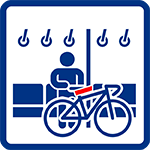
Always secure your bike with rubber straps or rope so it can’t shift while moving. If you don’t have anything to tie it down with, ask station or train staff.
-
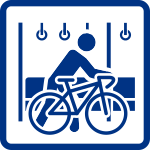
Wait for the train to come to a complete stop before moving your bike.
-
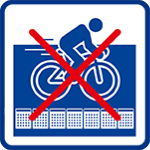
Don’t ride your bike on the platform.
-
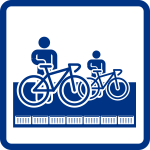
Children of elementary school age or younger must be with an adult.
-
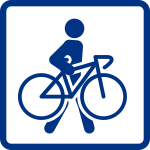
Carry your bike yourself and keep some space between yourself and other riders.
-
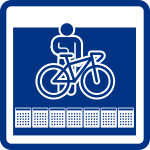
Keep your bike on the inside of the yellow tactile paving.
Being a Good Fellow Rider
-
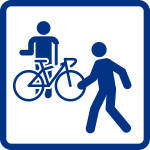
Yield to pedestrians when passing.
-
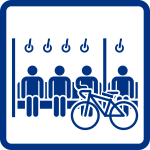
On a crowded train, a quick word and a little give-and-take goes a long way.
Important Notes
- You are responsible for your own safety and the safety of those around you while using the Cycle Train, both on the platform and on the train.
- Please ride in small groups. (Please don’t use the service for large groups heading to the same destination, such as for school commutes or club activities.) Bikes may not be allowed on board if the train is crowded.
- The Cycle Train may become unavailable on short notice due to cancellations, delays, or other circumstances.
- Trains expected to be especially busy—such as those running on fireworks-festival nights—may be removed from the Cycle Train schedule.
- If you bring your bike on a train that’s not part of the Cycle Train service, you’ll need to take it apart and pack it in your own bike bag.
- (Total length + width + height of 250 cm or less, with a maximum length of 200 cm, and a weight of 30 kg or less.)